
TCEF Sea Series: Towards a Zero-Waste Future
Towards a Zero-Waste Future: A Conversation with Prof. Dr. Sedat Gündoğdu
Making zero-waste living possible — science, policy, and society
The journey of microplastics through the seas reveals more than environmental pollution; it reflects the deep imprint of our production and consumption systems on nature. Through his research, Prof. Dr. Sedat Gündoğdu makes this invisible pollution visible, showing how science can and must intersect with society, policy, and everyday life.
To begin, could you briefly introduce yourself?
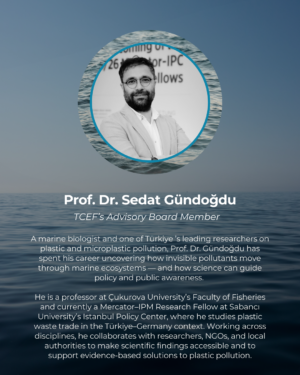
I am a biologist, specifically a marine biologist. I completed my MSc and PhD in fish biology. During my doctoral studies, I decided to focus my postdoctoral research on marine pollution and its sources—a direction primarily shaped by what I witnessed firsthand during fieldwork. Today, I work with various researchers on all dimensions of plastic and microplastic pollution.
I am currently a professor at Çukurova University’s Faculty of Fisheries. At the same time, I am a 2025/26 Mercator–IPM Research Fellow at Sabancı University’s Istanbul Policy Center, where I study plastic waste trade within the Germany–Türkiye context. I am married and share my life with two cats, Mikro and Venüs.
Based on your research, how would you describe the current state of plastic pollution in Türkiye?
Türkiye is facing a severe plastic pollution problem, and this pollution is not limited to the seas. Plastic pollution is often perceived as a marine issue, but in reality, Türkiye’s entire ecosystem is heavily contaminated with plastic.
The Eastern Mediterranean coast is particularly affected. The Seyhan and Ceyhan rivers carry enormous amounts of plastic waste into the Mediterranean—not only macroplastics, but also significant levels of microplastics, mainly originating from the recycling and textile industries. In addition, the Mediterranean’s current system transports plastic pollutants from other coastal countries, concentrating them along Türkiye’s shores.
If we were to rank seas by pollution pressure, Türkiye’s Mediterranean coast would likely be at the top. This pollution is not confined to marine environments: soils, rivers, remote streams, and even high mountain peaks are contaminated with micro- and macroplastics. As a result, our food systems are also at risk. Studies conducted by our Microplastics Research Group and others have identified microplastics in fish, mussels, table salt, oils, and many other food products.
Plastic waste imports further exacerbate this already complex and severe problem.
Over the past decade, awareness around plastic pollution has grown rapidly. What do you see as the most critical gain during this period?
There has undoubtedly been a visible increase in awareness and interest. When we published Türkiye’s first microplastics study in 2016, only a few researchers were working in this field. Today, almost every university has researchers focusing on microplastics. Recently, for example, a TÜBİTAK-supported analysis course we organized for young researchers in Rize received around 50 applications—clear evidence of growing academic interest.
Public awareness has also increased significantly. At the policy level, although not yet at a sufficient scale, we do see some developments: action plans on single-use plastics, marine litter, and microplastics; circular-economy strategies; deposit–return systems; and zero-waste discourse.
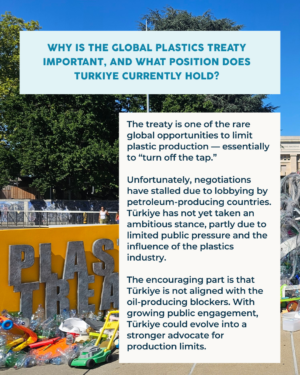
However, these initiatives largely remain at the conceptual level and lack short-term, binding measures. Awareness alone is not enough. Current solutions mainly focus on treating the consequences rather than addressing the source. We repeatedly see plans to “turn off the tap” postponed by 10 to 15 years, creating the risk that by the time action is taken, it will be too late.
My primary concern is that approaches which merely delay the problem—and do not offer real solutions—are becoming the dominant response. This risks turning plastic pollution into an even more serious environmental and public health crisis. At the same time, there is increasing global pressure for action, and this will inevitably have implications for Türkiye, though the timing and scale remain uncertain.
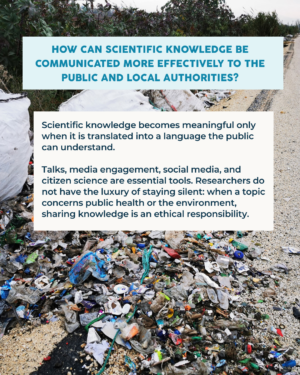
Plastic pollution is increasingly linked to justice, health, and climate. How can initiatives like the Plastics-Free Türkiye Platform strengthen Türkiye’s regional or global role?
In Türkiye, the number of NGOs working directly on plastic pollution is minimal. Many focus primarily on clean-ups or certification schemes. The Plastics-Free Türkiye Platform was established to intervene in this landscape by promoting source-reduction strategies and making approaches used in other countries applicable in Türkiye.
With limited funding, the platform has built a basic infrastructure, brought together NGOs aligned with its principles, and worked to disseminate science-based knowledge and practices. There are many successful global examples of such collaborations.
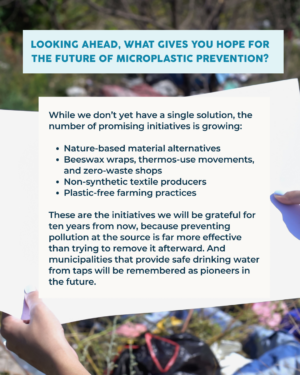
Plastic pollution is a multidimensional issue, and it must be addressed beyond the narrow frame of recycling or environmental cleanup. Our goal is to build common ground among NGOs from different fields and address plastic pollution at its source.
Book recommendation
Andrea Wulf – The Invention of Nature
This book traces the life of Alexander von Humboldt. Reading it helped me better understand the roots of my own efforts to comprehend nature. Humboldt’s boundless curiosity and desire to explore are powerfully conveyed, making it a book that can be read in one sitting while offering profound insights.
This interview is part of TCEF’s Sea Series, developed in collaboration with members of TCEF’s Advisory Board. The series aims to bring together experiences from diverse fields working on Türkiye’s coastal and marine ecosystems, highlighting conservation approaches that connect science, art, and community-based action.